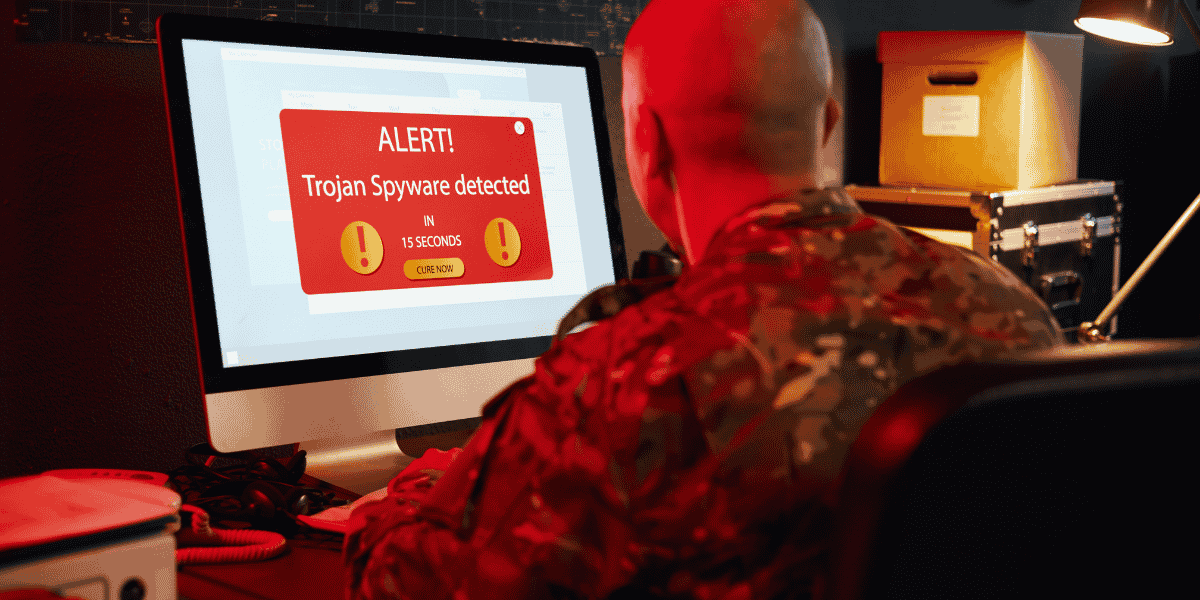
Cyberattacks don't wait for business hours, and most security teams can't watch a network at 3 a.m. That gap is why so many companies compare SOC as a service providers before hiring a single in-house analyst. The average data breach now costs $4.88 million, according to IBM's research on managed security services, a figure that climbs sharply without continuous monitoring. A security operations center delivered as an outsourced service gives you round-the-clock coverage and trained analysts without months of in-house build-out. In this guide, you will learn what SOC as a service includes, how it compares to running your own SOC, and how to choose the right partner.
What Is SOC as a Service?
A SOC as a service provider runs a fully staffed security operations center on your behalf, watching your networks, endpoints, and cloud environments around the clock. Instead of hiring and rostering an internal team across three shifts, you plug into infrastructure the provider has already built.
The model, often shortened to SOCaaS, bundles technology, people, and process into one subscription. Analysts triage alerts from your firewalls, endpoints, and cloud logs, escalate genuine threats, and hand you a clear incident response plan when something needs attention.
This differs from a traditional managed security service provider (MSSP) mainly in scope. Many MSSPs sell SOC as a service as one tier of a broader catalog; erpo.in's guide to managed security service providers breaks down that wider category.
At the center sits a SIEM that ingests logs and flags anomalies. The provider owns and tunes this platform, so you never hire a SIEM engineer just to keep the dashboard useful.
Why SOC as a Service Matters in 2026
The case for outsourcing security monitoring has shifted from nice-to-have to necessity. Managed security services are growing 11.1% in 2026 — the fastest rate of any security spending category — as organizations lean on outside providers for roles they can't fill internally, according to Gartner's information security spending forecast.
That shortage is real. A global cybersecurity talent gap leaves many IT leaders little choice but to work with third-party partners just to keep security operations staffed, according to McKinsey research.
Building an internal SOC means hiring several analysts to cover three shifts and tuning a SIEM — often before you've stopped a single attack. SOC as a service providers spread that cost across many clients, giving smaller companies the same detection quality as an enterprise security team.
In-house SOC vs. traditional MSSP vs. SOC as a service — how the models compare
|
Factor |
In-House SOC |
Traditional MSSP |
SOC as a Service |
|
Setup time |
6–12 months |
4–8 weeks |
1–3 weeks |
|
Staffing |
Hire and train your own analysts |
Shared analyst pool, broad IT focus |
Dedicated security analysts, SOC-only focus |
|
Coverage |
Limited to shifts you can staff |
Often business hours plus on-call |
True 24/7/365 |
|
Typical cost model |
High fixed cost |
Bundled monthly retainer |
Scalable subscription, per-asset or per-user |
What a SOC as a Service Provider Delivers
Most SOC as a service providers bundle the same core functions, shown below.
Core deliverables included in a typical SOC as a service engagement
|
Deliverable |
What It Covers |
|
24/7 Threat Monitoring |
Continuous review of network, endpoint, and cloud telemetry |
|
Managed SIEM |
Provider-owned platform correlates logs and flags anomalies |
|
Threat Intelligence |
Curated feeds distinguish real attacks from background noise |
|
Incident Response |
Defined escalation paths and containment playbooks |
|
Compliance Reporting |
Monthly reports mapped to SOC 2, ISO 27001, or the DPDP Act |
|
Analyst Access |
A direct line to security analysts during active incidents |
24/7 Monitoring and Detection
Analysts watch network traffic, endpoint activity, and cloud logs through a shared SIEM, using threat intelligence to separate real attacks from noise. When behavior deviates from baseline — an unfamiliar login location, a spike in outbound traffic — the system flags it within minutes.
Incident Response
Detection only matters if it triggers action. A capable provider defines escalation paths in advance — what gets auto-contained, what pages a human, and what triggers a call to leadership. Incident response playbooks turn a 2 a.m. alert into a rehearsed sequence, a topic erpo.in covers further in its guide to cybersecurity services for businesses.
Compliance and Reporting
Most providers also produce the audit trail regulators expect. Monthly reports map to frameworks like SOC 2, ISO 27001, or India's DPDP Act, flagging configuration drift before it becomes a finding. For businesses handling sensitive data, this reporting layer often doubles as compliance monitoring.
Startups vs. Enterprises: Choosing the Right Fit
Company size changes what you need from a provider, even though the underlying service stays the same.
For Startups
Early-stage companies rarely need a dedicated security hire in year one. A SOC as a service subscription gives founders investor-ready security posture without adding headcount, and pricing usually scales with endpoints or users. erpo.in's guide to cybersecurity for startups covers budget-friendly ways to layer this on top of existing tools.
For Enterprises
Larger organizations often already run a security team but lack night and weekend coverage. Here, SOC as a service extends the existing function — the provider's analysts handle Tier 1 triage and hand confirmed incidents to your in-house team, keeping senior staff focused on strategy instead of alert fatigue.
How to Choose the Right SOC as a Service Provider
Not every provider delivers the same depth of coverage, so evaluate candidates against a consistent checklist.
- Confirm the provider staffs a true 24/7/365 SOC rather than an on-call rotation disguised as continuous coverage.
- Ask which SIEM and threat intelligence platforms they use, and whether those tools integrate with your existing cloud and endpoint stack.
- Request sample incident reports to judge how clearly they explain root cause, impact, and remediation steps.
- Check average time-to-detect and time-to-respond metrics, and ask for them in writing as part of the SLA.
- Verify which compliance frameworks they report against, especially if your industry requires SOC 2, HIPAA, or India's DPDP Act.
- Clarify pricing structure upfront — per-endpoint, per-user, or flat-rate — so costs stay predictable as you scale.
Where SOC as a Service Fits with Managed Detection and Response
SOC as a service and managed detection and response (MDR) overlap enough to confuse buyers, but the distinction matters. MDR centers on endpoint-level detection built around one vendor's stack. SOC as a service is broader — it covers network, cloud, identity, and endpoint telemetry together, delivered through a human-staffed operations center rather than automation alone.
If your business already runs strong penetration testing services, a SOC as a service layer closes the remaining gap: catching what preventive controls miss once an attacker is already inside.
Frequently Asked Questions About SOC as a Service Providers
What is a SOC as a service provider?
A SOC as a service provider is a third-party company that operates a fully staffed security operations center on your behalf, monitoring your network, endpoints, and cloud infrastructure around the clock. Instead of building an in-house team, you get trained analysts and established incident response playbooks through a monthly subscription. SOC as a service works alongside your existing tools rather than replacing them.
How long does onboarding take?
Most SOC as a service providers can onboard a new client within one to three weeks, compared with six months or longer to build an in-house SOC from scratch. Timeline depends on how many data sources need to connect and how much tuning your environment requires. erpo.in's cybersecurity risk assessment checklist covers how to prepare before onboarding begins.
How much does SOC as a service cost?
Pricing varies by provider, but most charge per endpoint, per user, or a flat monthly retainer that scales with company size. The real comparison isn't the sticker price — it's cost against building an equivalent in-house SOC, which typically needs several full-time analyst salaries plus SIEM licensing.
SOC as a Service vs. MSSP: What's the Difference?
A managed security service provider (MSSP) is the broader category — it can include firewall management and compliance consulting alongside monitoring. SOC as a service is a specific offering within that category, focused narrowly on detection, triage, and response.
Do I need this if I already have an IT team?
Yes, in most cases. A general IT team manages infrastructure and uptime — security monitoring at 3 a.m. usually isn't part of that job. SOC as a service fills that gap without pulling staff from core work. See erpo.in's guide to data security strategy for businesses for more.
What does SOC as a service include?
SOC as a service typically includes 24/7 network and endpoint monitoring, a managed SIEM, threat intelligence, alert triage, and incident response support. Most providers also deliver monthly compliance reporting. Exact scope varies by vendor, so confirm what's included before signing a contract.
Why do companies outsource security monitoring?
Companies outsource security monitoring to get continuous coverage without hiring and staffing an internal team around the clock. It's typically faster to deploy and less expensive than building an equivalent in-house security operations center from scratch.
Can a small business afford SOC as a service?
Yes. Most SOC as a service providers price by endpoint or user, so small businesses pay only for what they need to protect — a fraction of the cost of hiring even one full-time security analyst.
How is SOC as a service different from antivirus software?
Antivirus software blocks known threats on individual devices. SOC as a service adds human analysts and network-wide visibility on top of that — catching attacks that slip past automated tools.
Choosing among SOC as a service providers comes down to fit: the right partner should match your compliance needs, your existing tech stack, and your growth trajectory — not just the lowest monthly price. A strong SOC as a service provider becomes an extension of your team, not a vendor you hear from only after something breaks. Whether you're a startup preparing for your first audit or an enterprise closing nighttime coverage gaps, the right outsourced SOC turns security into a managed, predictable function. Explore erpo.in's managed security service provider guide and cybersecurity services for businesses resources to compare options and build a security roadmap that scales with your business.
E-Commerce Development Web & App Development Technology Solutions MVP Execution & Ideation Enterprise Applications Digital Marketing Cloud Applications IoT & Machine Learning Cybersecurity Solutions